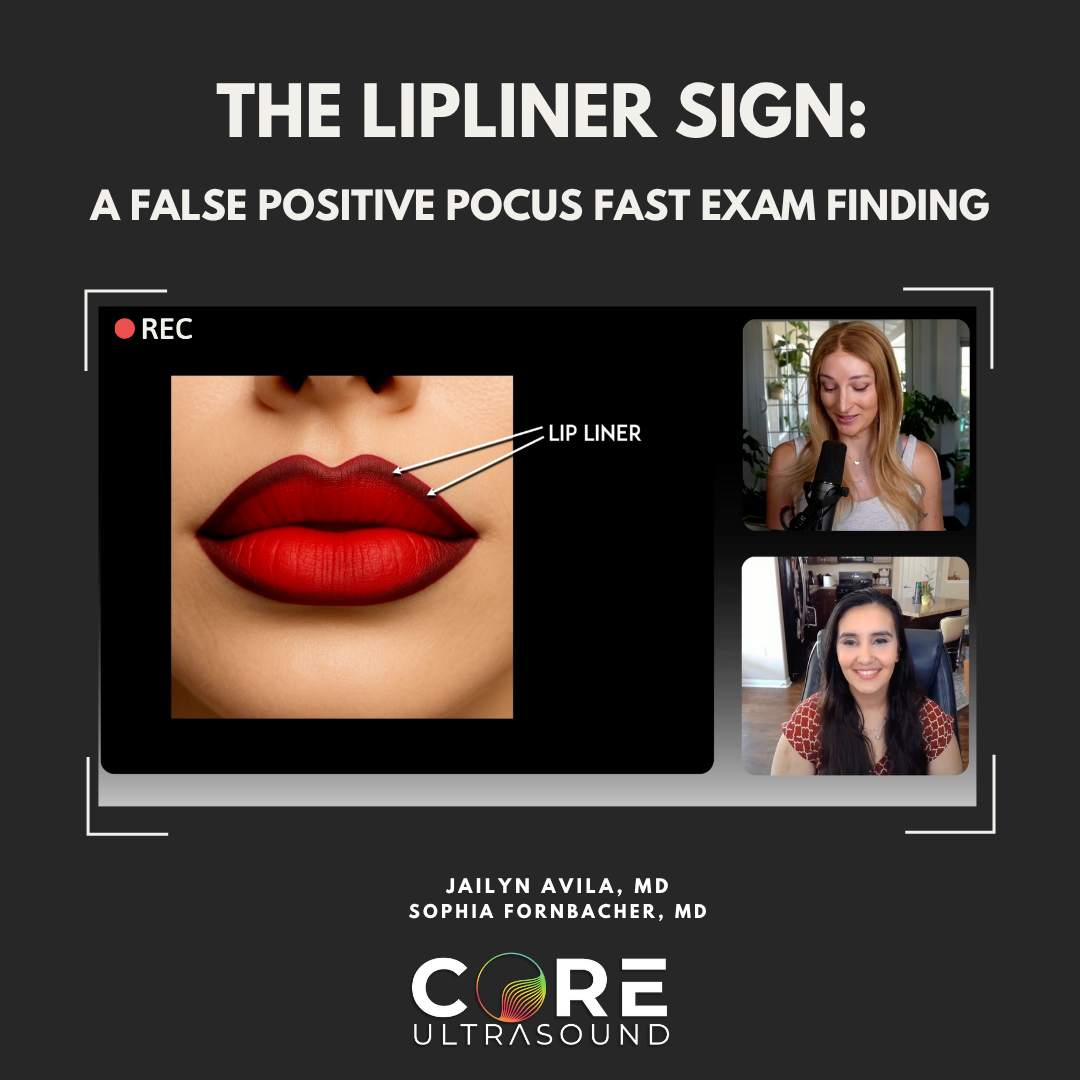
Exploring the Lip Liner Sign: Avoiding False Positives in FAST Examinations

Ultrasound Podcast
The "lip liner sign" serves as a potential source of false-positive results during FAST examinations, manifesting as a hypoechoic border that mimics free fluid. This artifact, often confused with the "double line sign" created by the interface between Glisson's capsule and Gerota's fascia, requires clinicians to correlate ultrasound findings with the patient's overall clinical stability and mechanism of injury. While the FAST exam remains a foundational tool for trauma assessment, particularly in level-one centers, its utility varies in community settings where other modalities like echocardiography or soft tissue ultrasound may take precedence. Dr. Sophia Fornbacher, a fellowship-trained emergency medicine physician, emphasizes the importance of maintaining a high index of suspicion for these artifacts to avoid over-interpreting subtle ultrasound findings, especially when the patient remains hemodynamically stable.
Sign in to continue reading, translating and more.
Continue