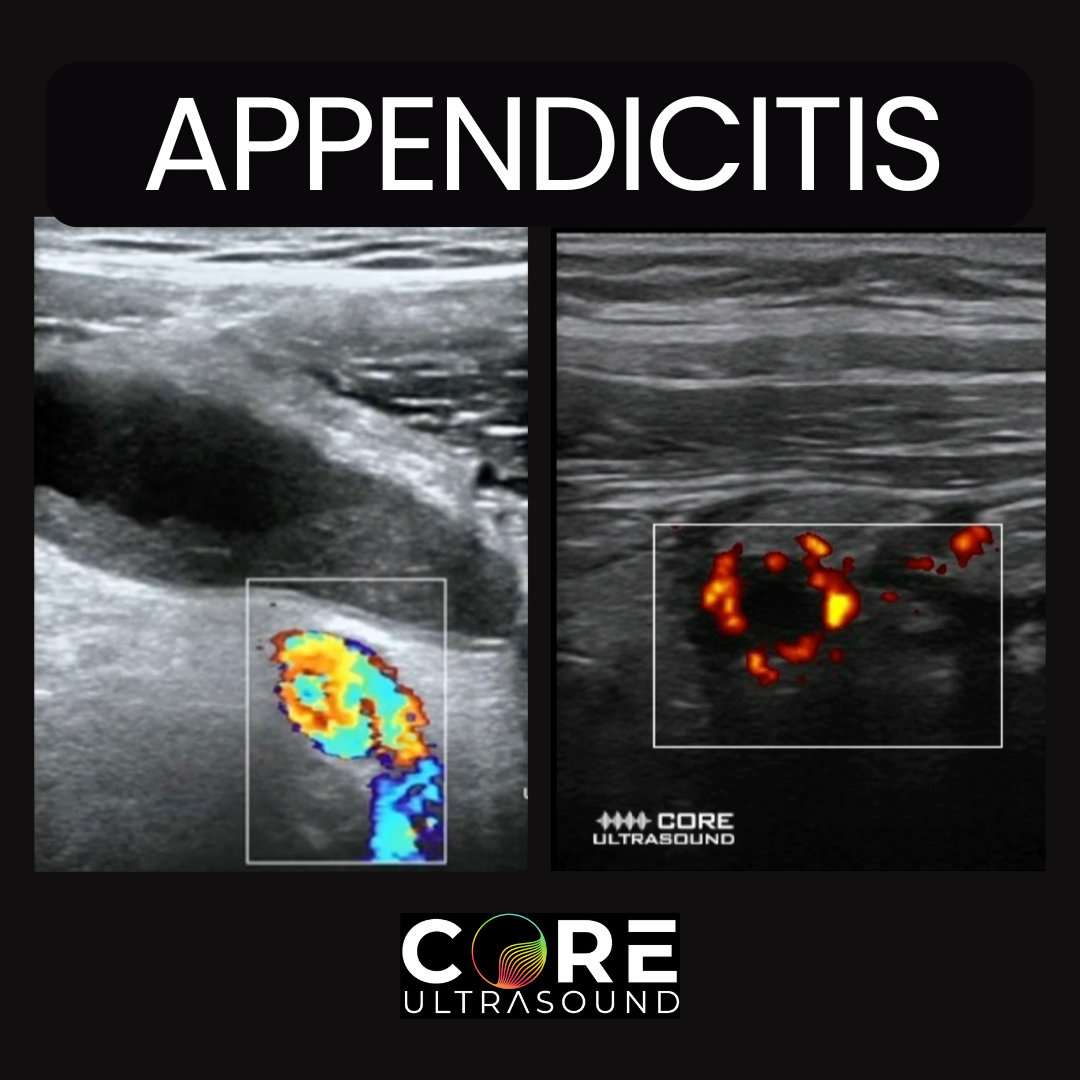

Point-of-care ultrasound (POCUS) serves as a critical diagnostic tool for identifying acute appendicitis, particularly when following a systematic scanning approach. Effective examinations begin with proper patient comfort through analgesia and selecting the appropriate transducer—typically linear, though curvilinear probes are necessary for patients with a higher BMI. The most efficient localization technique involves placing the probe directly where the patient indicates the most pain, often finding the appendix draped over the iliac artery. Diagnostic criteria for appendicitis include a non-compressible, non-peristalsing blind-ended tubular structure measuring seven millimeters or greater in diameter. Secondary sonographic signs such as fat stranding, localized free fluid, and the presence of a fecalith or "ring of fire" via color Doppler further support the diagnosis. In cases of perforation, the anatomy appears more convoluted with associated fluid collections, necessitating careful depth adjustment to visualize the pathology clearly.
Sign in to continue reading, translating and more.
Continue